The Launch
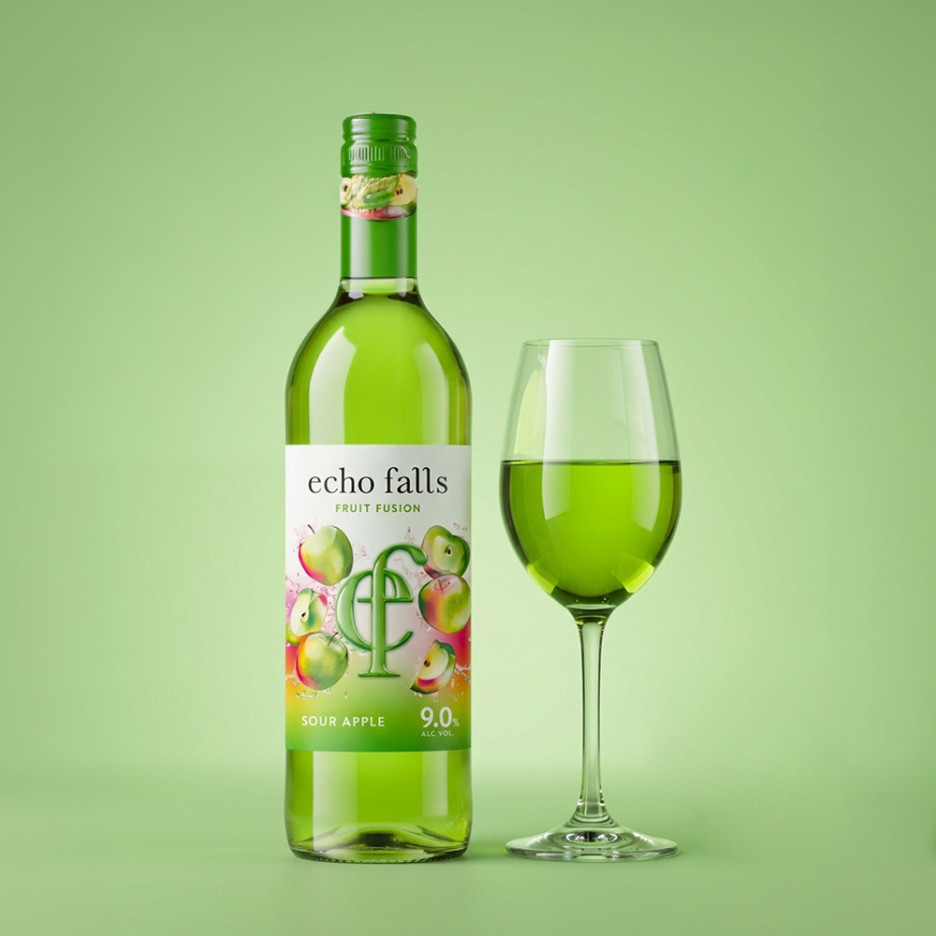
Echo Falls has added Sour Apple to its Fruit Fusion range, and it hasn’t been a quiet launch. It's a 9% ABV wine-based drink in a 750ml bottle at £6 RRP, with a vivid green liquid and a glow-in-the-dark Echo Falls monogram on pack.
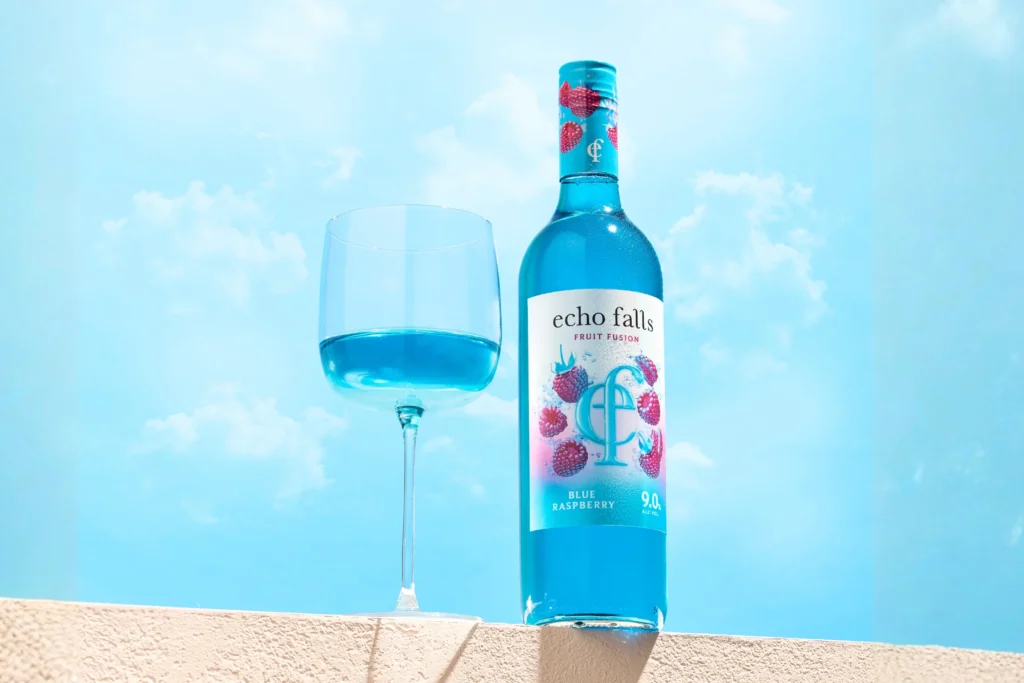
It follows Blue Raspberry, the electric blue flavour that went viral earlier this year, which owner Vinarchy says has sold more than two million bottles. The target is clear: 18–35s, who over-index on colourful, sweet, high-impact flavours in adjacent categories.
So is this the future of wine, or a short-lived novelty? We asked two of the team to take a side.
Against: great on the shelf, harder in the glass
Lucy McGuinn, Senior Strategy Manager
The numbers on Blue Raspberry are impressive, and I'm not going to pretend otherwise. My issue isn't whether Sour Apple will sell, it's what it asks us to believe about wine, and how long that holds.
The colour is doing too much. The green is built to stop you in the aisle and stand out on social media, and it will. But the liquid is also the first thing consumers judge quality by. BuzzBallz shows younger drinkers will happily buy something neon, so the problem isn't colour itself. It's colour in wine. In a cocktail or an RTD, bright colour signals fun and flavour, and nobody expects otherwise. In wine, colour is one of the few quality cues consumers can read through the bottle. To me, a shade no grape could produce reads as artificial flavouring and sugar.
We've seen this one before. As much as I love Apple Sourz (and trust me, I did), one look at that bottle takes me straight back to sticky floors and trays of neon green shots. That’s a strong memory for those of us towards the older end of the target consumer, and it's not a sipping memory. It frames the drink as a novelty to knock back rather than something to share over dinner.
It's a stretch for the category. Wine earns its place on the table through cues of grape, origin and craft, even at the most accessible end of the market. Sour Apple borrows the credibility of a wine brand while shedding almost everything that makes wine, wine. Pragmatically, it would make more sense as an RTD or in a can, where bright colour and bold flavour are the entry point.
Novelty has a shelf life. Blue Raspberry was the viral moment. Sour Apple is the sequel. Colour-led flavours tend to spike on trial and fade on repeat. If the plan is a new shade every six months, where will we end up?
So, will it sell? Probably, for a while. Will it make recruit new drinkers into the wider category? I'm less convinced. It feels like it's borrowing the category rather than growing it.
For: Wine's had a glow-up
Lizzie Carr, Managing Director
I'll put my hands up straight away: I am absolutely not the target audience for this. I'm definitely not who Echo Falls had in mind when they put these new products together. But there's something about these new products that I genuinely love.
Yes, they're not entirely new. Drinks like these have been around in the US for years. But I think Echo Falls has tapped into something interesting: a younger generation who increasingly see traditional wine as a bit boring, a bit old-fashioned and unconnected to their lifestyle.
Why does wine have to be so serious? I love the idea of having a rainbow of colours and flavours to choose from. If a vivid green Sour Apple or electric blue Raspberry makes someone pick up a bottle, give wine a go and enjoy the experience, why should we be complaining that it's not traditional wine? We spend so much time talking about how to recruit younger drinkers into the category, yet sometimes seem reluctant to embrace the things that might actually get them interested.
Categories are blurring everywhere. The lines between spirits, cocktails, RTDs and soft drinks are becoming increasingly fluid. Why should wine be any different? For me, this is another example of category “blurification”. Wine meets 1990s shot culture, with a bit of modern-day social media thrown in. It might not be what traditional wine drinkers recognise as wine, but perhaps that's precisely the point.
Not everyone wants complexity in a glass. At the heart of this debate is an uncomfortable truth for the wine industry: wine isn't necessarily a taste that younger consumers are looking for. And that's OK. We can all appreciate sophisticated drinks, complex flavour profiles and beautifully crafted products, but there's also a huge audience that simply likes things sweet, fun and easy to drink. We shouldn't assume that everyone wants the same experience, or that one is somehow more worthy than another.
And commercially, why wouldn't we? With wine consumption under pressure and Europe once again grappling with a wine surplus, finding new occasions, new audiences and new ways to enjoy wine has to be a good thing. If these kinds of products can bring a different generation into the category, surely that's worth exploring. Innovation doesn't always have to mean a new grape variety, a different region or a more interesting winemaking technique. Sometimes it means giving people something they actually want to drink.
So, will it sell? Blue Raspberry has already shown that there's an appetite for something different, and I wouldn't bet against Sour Apple. Will it convert these drinkers into fans of traditional Sauvignon Blanc or Pinot Grigio? Who knows, and perhaps that's not the immediate point. Maybe we need to stop worrying quite so much about what wine should be and start thinking about what it could become. After all, if we want the next generation to fall in love with wine, we might need to let them fall in love with it on their own terms
The verdict
Where we land is that both things can be true. Fruit Fusion has clearly found shoppers that the rest of the wine aisle isn't reaching, and the early sales say they're not just swapping out of another Echo Falls bottle. The real test is whether Sour Apple earns repeat purchase once the glow wears off, and whether those drinkers ever trade into the rest of the range.
If it does both, it's a genuine route into wine for a new generation. If it doesn't, it's a very good seasonal gimmick. Either way, every wine brand chasing younger drinkers should be watching what happens next.
Which side are you on?
Written by: Lizzie Carr, Managing Director and Lucy McGuinn, Senior Strategy Manager.